- News
LaterMost ReadDistinctive
 Rohingya News Agency: Myanmar: Tens of thousands of Rohingya people - who remain deprived of a nationality - displaced by “clearance operations” amid reports of unlawful killings, indiscriminate firing on civilians, ...
 - Issues
Most ReadDistinctive
- Books
- Documents
LaterMost Read
- Figures
- Entries
Most ReadDistinctive
 Shwe Maung, Former Myanmar MP November 15, 2016 Myanmar Security Forces are enjoying to kill Rohingyas including children, rape women and torching and destruction Rohingya houses and villages after the " October ...
 - Arakan











Meet the 'giraffe' women of eastern Burma who wear brass rings around their necks
Thursday | 24/04/2014 - 07:11 AM
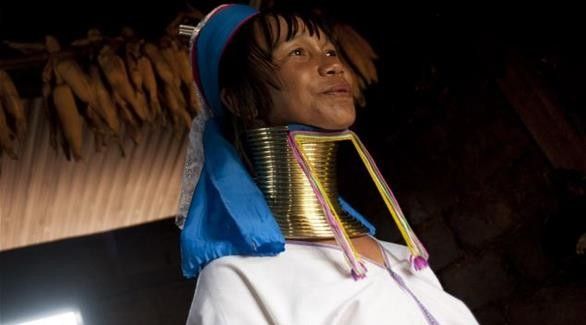
Rohingya News Agency –(bhaskar): In the border mountains between Burma and Thailand live the Kayan tribe, related to the Burmeses and Tibetans.
These are not to be confused with the Malayan people with the same name from Borneo, related to Dayaks. Today, their tribe numbers around 40,000 souls. But that’s not the focus, what’s fascinating about the women of these tribes are the neck rings they wear to given an impression of an elongated neck.
Visitors to their villages are amazed by the neck rings worn by the women of the tribe. The neck rings of a woman are, in fact, a single brass coil placed around the neck. The first coil is applied when the girl is five years old and with the growing is replaced by a longer coil. The length of the coil and the added weight presses the clavicle and the rib cage, resulting in the appearance of a very long neck.
The "secret" of the "giraffe" women is that the clavicle and the ribs descend 45 degrees down from their normal position. The maximum weight of a coil is of 10 kg. This ancient tradition has unknown roots. The coils may have made Kayan women unattractive to slave trade. Some say that the coils are against tiger bite. More likely, it reflects the neck of a dragon.
For the Kayan women, the coils confer them a tribal identity, associated with beauty. In fact, the coils ensure that Kayan women will marry only inside their own tribe. The rings, once on, are seldom removed, as it is a somewhat lengthy procedure. Many women removed the coils when they felt it as obsolete or for medical examinations.
But most women prefer to wear the rings once their neck are elongated, because the skin portion kept so many years under the brass is often bruised and discolored. And many, after ten years or more of continuous wear, feel the collar like an integral part of the body. Kayan women are usually now given a choice as to whether or not they want to wear the neck rings.
Most of those who still do, do so because they see them as beautiful or because they want to preserve the tradition.It is also likely that some wear them because they attract tourists who bring vital revenue to the community.

عدد القراءات: 6,141
Read also
 Chinese FM to meet Suu Kyi in bid to allay ‘distrust’
More section
التعليـــقات
Comments published does not reflect the opinion of the agency, but reflect the opinion of their owners



















New Agency
Articles


Books


 Report: The Human Rights of Stateless Rohingya in Thailand
Mailing List
Search


